Everest Base Camp Luxury trek – 14 Days

Tour Info

Trip code

EC-001

Starting Point/ End Point

Kathmandu

Accommodations

5-star hotel in Kathmandu

Max Altitude

5,545 m (Kala Patthar)

Duration

14 days

country

Nepal

Trip grade

Challenging

Best Season

Spring (March–May)

Highlights

Trip Highlights for Everest Base Camp Luxury Trek

  • Scenic flight between Kathmandu and Lukla, one world's most exciting mountain airports

  • Before the trek, enjoy a guided cultural tour in Kathmandu Valley.

  • Trek through the heartland of the Khumbu Region with traditional Sherpa Villages like Phakding Bazaar, Namche Bazaar and Khumjung.

  • Safer altitude gain with acclimatization hikes at Hotel Everest View or Nangkartshang Peak

  • Tengboche Monastery offers panoramic views of the Himalayas.

  • Enjoy the scenery of glaciers and moraines as you travel to Lobuche or Gorakshep.

  • Everest Base Camp is located at 5,364 meters.

  • Sunrise hike at Kala Patthar to see Mount Everest, surrounding peaks and more.

  • Enjoy a 5-star hotel in Kathmandu and classic teahouse trekking.

  • A well-paced itinerary for maximum mountain views and proper acclimatization


Overview

Everest Base Camp Luxury Trek Overview

The Everest Base Camp Luxury Trek is designed for travellers who wish to enjoy the most popular trekking destination in the world without sacrificing comfort. The journey begins as soon as you arrive in Kathmandu. It is planned and organized to ensure a smooth, well-supported, and organized experience. The journey begins with a guided tour of Nepal's culture, history and spiritual landmarks, followed by a night in a 5-star hotel.

 Everest Base Camp Luxury Trek begins with a scenic Lukla flight, followed by an easy trek through the Khumbu area. The trail takes you through river valleys and pine forests with suspension bridges. It also passes classic Sherpa settlements like Phakding, Namche Bazaar, and Dingboche. The Everest Base Camp, at 5,364 metres, is the highlight of this trek. 

What to Expect on Everest Base Camp Luxury Trek

This trek offers comfort and a balance between steady walking and acclimatization. You can gradually adjust your body to the ascent, which will reduce fatigue. It can be a moderate pace or a challenging one, but it's manageable with breaks and support.

The accommodations are selected for their cleanliness, comfort, and reliability.  Hot meals, comfortable lodging, and friendly service all contribute to keeping the trekking experience relaxing and enjoyable, despite the higher elevation.

Everest Base Camp Luxury Trek Experience

On this journey you can adjust the pace and daily schedule to your own comfort. You can adjust the trekking hours and have ample time to rest, take pictures, or simply enjoy the scenery. Additionally, you can customize your Kathmandu sightseeing and trekking days according to your interests and physical condition.

From hotel bookings to flight reservations, every detail is taken care of. We focus on a smooth trip so you can focus on the experience and not on logistics. 

Safety Comes First Throughout Everest Base Camp Luxury Trek

Safety is a top priority on the Everest Base Camp Luxury Trek. The itinerary includes acclimatization days at Namche Bazaar and Dingboche, giving your body time to adjust to higher altitudes.

You stay at lodges that provide warm meals, clean drinking water, and proper rest after each trekking day. Guides monitor your condition daily, and emergency procedures are in place throughout the route. Weather conditions are closely observed, especially for flights to and from Lukla, ensuring safe and well-timed travel. Furthermore, Everest Chopper, as one of the best Heli Tour Company in Nepal, is also qualified by the authorities to carry out heli rescue operations in the mountains, adding another layer to your security during emergencies. 

Extra Highlights of the Everest Base Camp Luxury Trek

This trek offers more than just reaching Base Camp. You experience the vibrant atmosphere of Kathmandu, the lively Sherpa culture of Namche Bazaar, and the peaceful high-altitude environment of Dingboche and Lobuche. Each location adds a different rhythm and character to the journey.

You can cherish the small moments, like crossing suspension bridges, watching the prayer flags fly in the mountains covered with snow, or seeing Mount Everest rising up at dawn. The easy decline along the known paths allows you to contemplate while heading back to Kathmandu.

The ideal times for the Everest Base Camp Luxury Trek are spring and autumn.

The spring offers rhododendrons in bloom, warmer temperatures and stable weather. Autumn brings crisp air, excellent mountain visibility and stable weather. For those who prefer quieter trails or a peaceful experience, winter treks can be arranged. Winter is a great option for those who are well prepared, even though temperatures may be colder in higher altitudes. 

Accommodation and Meals on Everest Base Camp Luxury Trek

You will stay in a 5-star hotel in Kathmandu that provides excellent service and comfort before and after your trek. Accommodation is provided in mountain lodges with a focus on cleanliness, comfort, and warmth during the trekking days. The rooms are typically twin-sharing, with comfortable bedding. They provide a relaxing place to rest after a long day of walking. The meals are prepared fresh and designed to help with energy levels and elevation adjustment. Enjoy a variety of local dishes such as dal bhat, along with soups and rice meals. As the altitude increases, food becomes lighter and warmer. This helps with digestion and comfort during the trek.

Everest Base Camp Luxury Trekking: Why is it Popular?

The Everest Base Camp Luxury Trek is one of the most popular high-altitude treks around the globe because of the mountain views and the logistical management of the trip. This is because the Everest Base Camp Luxury Trek gives one the opportunity to walk under the shadow of Mount Everest, staying in comfortable accommodation and enjoying an itinerary that has been carefully planned. This trek is also ideal for travelers who want to experience the beauty of the Himalayas but don't have to go through any form of hassle. This is because the trip provides comfort, safety, and adventure all rolled into one. This trip includes luxury hotels and expert guidance, as well as a well-paced itinerary.

Itinerary

Day 01: Arrive in Kathmandu and transfer to your 5-star hotel

Upon arrival at Tribhuvan International Airport, you will be warmly welcomed by a representative. You will then be transferred in a private vehicle to your 5-star Hotel. As you travel through the busy streets of Kathmandu, a traditional greeting will set the tone for the rest of your trip. You have time after check-in to relax, freshen up and recover from an international flight.

Kathmandu is a captivating mix of ancient temples and modern life. It also offers an exciting cultural experience. The rest of the day should be relaxed to allow your body time to adjust. This is an excellent way to prepare both mentally and physically.

  • Max Elevation: 1,400 m

  • Distance: ~10 km (airport transfer)

  • Travel Duration: ~30–45 minutes

  • Accommodation: 5-star Hotel 

  • Meals Included: Breakfast

Day 02: Visit Kathmandu’s main cultural sites and finalize trek preparations

This day is dedicated to exploring Kathmandu’s cultural highlights and finishing the final preparations before your trek. Private transport will be provided to take you and your guide to UNESCO World Heritage Sites. These sites are a reflection of Nepal's historical and spiritual traditions.

Kathmandu Durbar Square should be the first place you visit. The palaces, courtyards, and Newari architecture are its most notable features. Then, you visit Swayambhunath Stupa (also known as the Monkey Temple), which provides a panoramic view of the Kathmandu Valley. Pashupatinath Temple is Nepal's most important Hindu temple, where rituals are performed along the Bagmati River.

You will meet with your guide in the afternoon for a thorough briefing. The guide will explain the route to be taken, how long you should walk each day, changes in altitude, safety precautions, and check your equipment. The guide makes any last-minute adjustments. Enjoy a last night in comfort and rest before you head into the mountains.

  • Max Elevation: 1,400 m

  •  Distance: ~25–30 km (sightseeing drive)

  •  Travel Duration: ~5–6 Hours (including visits)

  •  Accommodation: 5 Star Hotel in Kathmandu

  •  Meals Included: Breakfast

Day 03: Fly from Kathmandu to Lukla and trek to Phakding. Max Altitude: 2,860 m

On this day, you transfer to the airport early in the morning for your scenic flight. The scenic flight takes you over hills, rivers and Himalayan peaks. You land at the mountain airstrip after a short flight in a chopper. You will meet your trekking crew upon arrival and start your Everest region adventure.

The trail from Lukla to Phakding is mostly gentle and downhill. It passes through small Sherpa settlements, suspension bridges and pine forests. The first day of trekking is designed to be easy. It allows you to get into the walking rhythm and take in the scenery without feeling rushed.

Arrive in Phakding in the afternoon. You have the rest of the day to explore the village and spend your first night.

  • Max Elevation: 2,860 m

  •  Duration: ~3–4 Hours

  • Accommodation: Lodge/ Tea House

  •  Meals Included: Breakfast, Lunch, Dinner

Day 04: Trek from Phakding to Namche Bazaar. Max Altitude: 3,445 m

The trek today follows the Dudh Koshi River and includes several suspension-bridge crossings, including the famous Hillary Suspension Bridge. You will pass through villages such as Monjo and enter Sagarmatha National Park, where permits are checked. As you ascend towards Namche Bazaar, the trail becomes steeper. You may see Mount Everest for the first time on a clear day. The final climb to Namche can be challenging, but it is also rewarding.

Namche Bazaar, the commercial hub of Everest, is filled with shops, cafes and trekking stores. Enjoy the evening in the vibrant mountain town.

  • Max Elevation: 3,445 m

  •  Duration: ~5–6 Hours

  • Accommodation: Lodge/ Tea House

  •  Meals Included: Breakfast, Lunch, Dinner

Day 05: Hike for acclimatization to Hotel Everest View and explore Khumjung village. Max Altitude: 3,880 m

This day is for acclimatization, to help you adjust to the altitude. On a clear day, you can see Everest, Lhotse and Ama Dablam from the Hotel Everest View. After enjoying the view, you will continue on to Khumjung Village, a traditional Sherpa village known for its monasteries and local lifestyle. The walk is leisurely and offers plenty of opportunities for photography and rest. Then you head towards the Everest View Hotel, which is your accommodation for the day. This luxurious hotel offers a comfortable setting to rest and relax with peace of mind after the day’s hike. The Everest View Hotel is located roughly 2–3 hours’ walk from Namche Bazaar.

  • Max Elevation: 3,880 m

  •  Duration: ~4–5 Hours

  • Accommodation: Everest View Hotel

  •  Meals Included: Breakfast, Lunch, Dinner

Day 06: Trek from Namche Bazaar via Tengboche to Deboche. Max Altitude: 3,820 m

After breakfast, you will leave Namche Bazaar to trek along the scenic trail that contours over the Dudh Koshi River. On clear days, this section of the trail offers steady walking and wide views of Ama Dablam. Everest, Lhotse and Nuptse are all visible. The trail descends gradually to the river, before starting a steady climb uphill toward Tengboche.

As you climb, the surrounding quietens, and forests of rhododendrons and pines line the path. Tengboche Monastery is the spiritual heart of the Khumbu Region. The monastery is situated in an open, dramatic setting, surrounded by towering Himalayan mountains. This makes for one of the most memorable trek moments.

You can continue your descent to Deboche via peaceful forest trails after spending some time in the monastery. This shorter day of trekking allows you to rest your body while still gaining elevation. Arriving at Deboche in the afternoon, you settle into a lodge surrounded by nature for rest and an overnight stay.

  • Max Elevation: 3,820 m

  •  Duration: ~3–4 Hours

  • Accommodation: Lodge/ Tea House

  •  Meals Included: Breakfast, Lunch, Dinner

Day 07: Trek from Deboche to Dingboche. Max Altitude: 4,410 m

As you continue to Dingboche, you will be further in the high alpine area. The trail starts with a gradual ascent through the forest before opening up into wider valleys. The trail passes through Pangboche, one of the earliest Sherpa villages in the area, with its traditional stone houses, fields, and local mountain life.

As you climb higher, the vegetation gets sparser. The trail follows Imja Khola Valley, with stunning views of Ama Dablam dominating the landscape. Walking pace is steady with frequent breaks to adjust to thinner air.

As you near Dingboche, the landscape becomes more open, rugged and surrounded by high mountains and stone-walled fields designed to protect crops against cold winds. Dingboche is located in a large valley, which makes it a good place to acclimatize. Arrive in the afternoon, and rest at the lodge for the remainder of the day to prepare for the higher elevations that lie ahead.

  • Max Elevation: 4,410 m

  • Duration: 5-6 Hours

  • Accommodation: Lodge/ Tea House

  • Meals Included: Breakfast, lunch, dinner

Day 08: Acclimatization day at Dingboche with a hike to Nangkartshang Peak. Max Altitude: 5,083 m

This is another day of acclimatization. The hike up to Nangkartshang Peak is steep, but rewarding, with views of Makalu and Lhotse. You should take it slowly to help your body adapt to the thinner atmosphere. You descend to Dingboche after reaching the viewpoint for lunch and rest. Resting and preparing yourself for the next sections of the trek is what you do the rest of the day.

  • Max Elevation: 5,083 m

  • Duration: 4-5 Hours

  • Accommodation: Lodge/ Tea House 

  • Meals Included: Breakfast, lunch, and dinner

Day 09: Trek from Dingboche to Lobuche. Max Altitude: 4,940 m

As you move from Dingboche to Lobuche, you will be able to see more of the Himalayan mountains. The trail begins with a gradual ascent across open terrain that offers wide views of peaks like Taboche or Cholatse. As you climb higher, the scenery becomes more barren and rugged. The feeling of being far away increases.

After passing Dughla, you will make a steady climb to the memorial ridge, which is dedicated to climbers who lost their lives on Everest. This section is reflective and slow, giving you time to adjust to the thinner air and rest. The trail then continues along the Khumbu Glacier's edge until you reach Lobuche. In the evening, you will spend the time in the lodge to rest, stay warm and prepare for the important days of your trek.

  • Max Elevation: 4,940 m

  • Duration: 5-6 Hours

  • Accommodation: Lodge/ Tea House

  • Meals Included: Breakfast, lunch, and dinner 

Day 10: Trek from Lobuche to Gorakshep and hike to Everest Base Camp

It is the day that everyone looks forward to the most. The slow walk along the Khumbu Glacier to Gorakshep is on uneven and rocky terrain. Altitude makes walking difficult, so pace is kept steady and regular breaks are taken.

You continue to Everest Base Camp after reaching Gorakshep. The trail follows the glacial moraine, with a view of icefalls and towering peaks all around. You spend time in Gorakshep taking photos and absorbing the surroundings. Rest is important because of the altitude. 

  • Max Elevation: 5,364 m

  • Duration: 6-7 Hours

  • Accommodation: Lodge/ Tea House

  • Meals Included: Breakfast, Lunch and Dinner 

Day 11: Early morning hike to Kala Patthar for sunrise, then trek down to Pheriche.

The hike to Kala Patthar, which is the highest point on the trek, starts early in the morning. This climb is a bit challenging but equally rewarding. You can see the sunrise over Mount Everest and enjoy panoramic views of Nuptse Glacier, Pumori Glacier, and Khumbu Glacier.

Once you reach this point, you begin your descent to Pheriche after returning downhill from Gorakshep. As oxygen levels rise and the trail becomes easier, you will feel more comfortable on your descent. As you pass familiar villages and valleys with warmer air, and at a slower pace, the descent becomes more comfortable. Arriving in Pheriche late afternoon, you settle into your lodge to enjoy a well-deserved rest.

  • Max Elevation: 5,545 m

  • Duration: 6-7 Hours

  • Accommodation: Lodge/ Tea House

  • Meals Included: Breakfast, lunch, and dinner

Day 12: Trek from Pheriche to Namche Bazaar. Max Altitude: 3,440 m

The walk today is long, but mostly downhill. This makes it easier on your lungs and legs. Retrace your footsteps through Pangboche, Deboche, and Tengboche. You will pass forests and suspension bridges on the way. As you descend, the vegetation gradually returns, and temperatures become milder. Namche Bazaar signals your return to the vibrant heart of the Khumbu Region. The comforts of Namche are especially welcome after days spent in remote settlements.

Once you reach the Namche Bazaar, you spend the night in Namche Bazaar at a lodge. You have time to relax, take a shower and explore the town.

  • Max Elevation: 3,440 m

  • Duration: 6-7 Hours

  • Accommodation: Lodge/ Tea House

  • Meals Included: Breakfast, lunch, and dinner 

Day 13: Trek from Namche Bazaar to Lukla. Max Altitude: 2,860 m

The last trekking day takes you along the Dudh Koshi River, back to Lukla. The trail is a mixture of gentle downhills and short ascents, passing through villages and completing one final suspension bridge crossing.

The lower altitude allows for a more comfortable walking day. Once you reach Lukla, Everest Base Camp Trek is complete. You will spend your last night in the mountains at the lodge, where you can celebrate the trip with your team.

  • Max Elevation: 2,860 m

  • Duration: 6-7 Hours

  • Accommodation: Lodge/ Tea House

  • Meals Included: Breakfast, lunch, and dinner 

Day 14: Fly from Lukla to Kathmandu and final departure. Max Altitude: 1,400 m

Enjoy one final aerial view of the Himalayas as you fly back to Kathmandu in the early morning in a chopper. You are taken to your hotel, or to the airport, depending on when you depart. You will carry with you memories of the people, mountains and landscapes in the Khumbu area.

  • Max Elevation: 1,400 m

  • Travel Duration: 35 Minutes (flight).

  • Meals Included: Breakfast

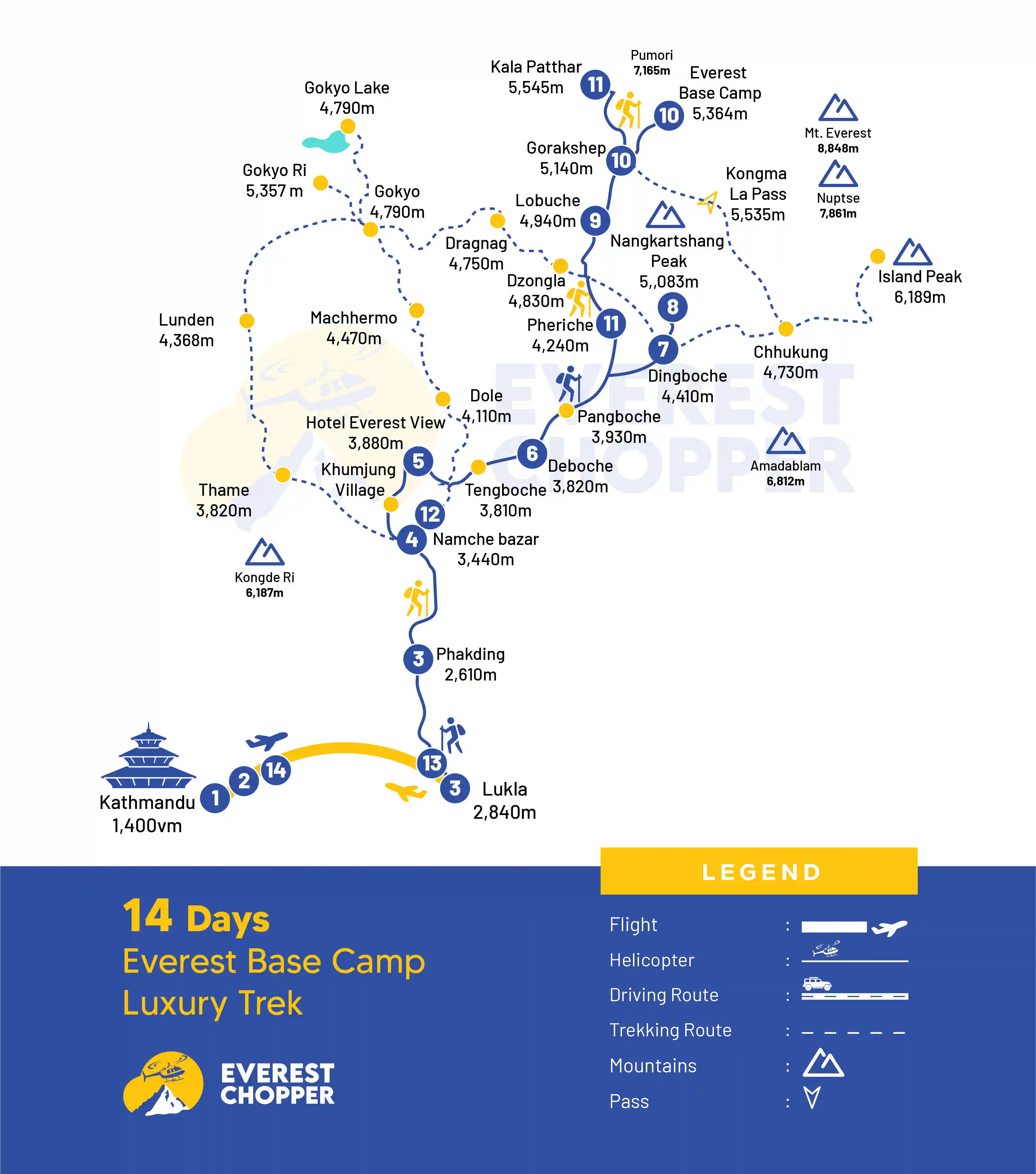
Trek Route

Everest base camp luxury trek - 14 days

Packing List for Everest Base Camp Luxury Trek

When the weather in the mountains changes, packing smartly is key to a comfortable and enjoyable trek. As this is a high-altitude trek with lodge accommodation, you will only need the essentials.

  • Clothing:

    • Thermal base layers (tops & bottoms)

    • Fleece or insulated jacket

    • Down jacket for cold nights

    • Waterproof and windproof trekking jacket

    • Trekking pants (lightweight & warm)

    • Shorts (for lower-altitude days)

    • Trekking socks (multiple pairs)

    • Gloves, hat, and scarf/buff

    • Sunhat and sunglasses

    • Comfortable clothing for hotel stays in Kathmandu.

  • Footwear:

  • Broken-in trekking boots with good ankle support

  • Lightweight shoes or sandals for lodges and rest

  • Gear & Accessories:

  • Daypack for trekking essentials

  • Sleeping bag (3-season recommended)

  • Trekking poles

  • Water bottles or hydration system

  • Headlamp with extra batteries

  • Personal first aid kit & medications

  • Sunscreen and lip balm

  • Toiletries (biodegradable recommended)

  • Camera, phone, and power bank

  • Travel adapter (Nepal uses type C, D, and M plugs)

  • Optional Items:

  • Extra snacks like energy bars

  • Trekking gaiters

  • Lightweight rain cover for a backpack

Notebook, book, or journal

Cost Estimation

No. Of People

Price Per Person In USD

1 Pax

3065

2-3 Pax

2179

4-5 Pax

2003

6-7 Pax

1974

8-9 Pax

1943

10 Pax

1880


What's included

  • Airport transfers in Kathmandu
  • Accommodation at a 5-star hotel and lodges on the trek

  • All meals according to itinerary (breakfast at Kathmandu, breakfast, lunch and dinner on the trek)

  • Domestic flights (Kathmandu - Lukla - Kathmandu)

  • English-speaking experienced trekking guides and porter

  • Trekking permits, TIMS (Trekkers Information Management System), and other related information

  • Welcome and assistance for arrival and departure

  • First aid and oxygen in emergency situations

  • Everest region entrance fees (Sagarmatha National Park).

  • Daily briefings, trekking assistance and daily briefings

What's excluded

  • Nepal international airfare
  • Travel insurance is mandatory and includes high-altitude coverage.

  • Personal expenses (laundry and snacks, hot showers, WiFi)

  • Guides and porters: Tips

  • Drinks, alcohol or additional meals not mentioned in the itinerary.

Frequently Asked Questions

How difficult is the Everest Base Camp Trek?

Due to the long walking days and high altitude, this trek is moderately to very challenging. It is not necessary to have any climbing skills, but a good level of fitness and pacing is important. Most trekkers can manage the challenge with regular acclimatization, proper rest and good fitness.

How high is the altitude attained during the trek?

Kala Patthar, at 5,545 metres high, is the highest point on the trek. This viewpoint provides the best views of Mount Everest. This is the point that most trekkers arrive early in order to enjoy the sunrise and clear skies.

3. How does acclimatization work during a trek?

Two acclimatization days are included in the itinerary at Namche Bazaar and Dingboche. These days of rest help you adjust to the altitude gradually. These days are filled with short hikes to help you acclimatize.

4. What kind of accommodation will be provided on the trek?

While trekking in the Everest area, you will stay in lodges and hotels in Kathmandu. Lodges provide basic, but comfortable rooms and meals with shared facilities. Accommodations are selected based on cleanliness, warmth and reliability of service.

5. What meals are included in the trek?

All meals are included during the trekking days. All meals are prepared fresh and specially designed to keep you energized at high altitude. Along the route, you can choose from a variety of international and local dishes.

6. Does altitude sickness pose a risk on this trip?

Above 3,000 meters, altitude sickness is possible. This is why the pace of the trek must be carefully monitored. Your guides will monitor your condition every day and adjust the walking speed accordingly. If any symptoms are noticed, immediate action is taken.

7. How many miles do you walk per day?

Depending on the altitude and terrain, daily walking time can range from 3 to 7 hours. Regular rest breaks and a slow pace are part of the trek. The pace is slow and steady with regular rest breaks.

8. What will happen if there is a delay in a flight to or from Lukla?

There might be delays in flights to Lukla due to weather conditions. If so, additional buffer days can be planned for or other arrangements can be made. It is necessary to be flexible when entering and leaving the Everest region.

9. When is the best time to go trekking on this trek?

The best time to go trekking is during spring and autumn, as this is when the weather is clear, and the mountains are visible. Winter and monsoon treks can also be done, but these are more challenging.

10. Does my previous trekking experience count in this trip?

Experience in trekking is beneficial but not necessary. First-time trekkers are able to complete the journey with a positive attitude and proper preparation. Experience is not the only factor to consider.

User Review