Annapurna Base Camp trek with helicopter return for 5 Days

Tour Info

Trip code

EC-016

Starting Point/ End Point

Kathmandu

Accommodations

Lodge/ Tea House

Max Altitude

4,130 meters

Duration

5 days

country

Nepal

Trip grade

Moderate

Best Season

February, March, April, May, June, September, October, November and December

Highlights

  • Walk along the well-known Annapurna Base Camp trekking trail
  • Learn about rural Nepalese life and culture while passing through villages like Ghorepani, Tadapani, Chhomrong, Dovan, and Deurali
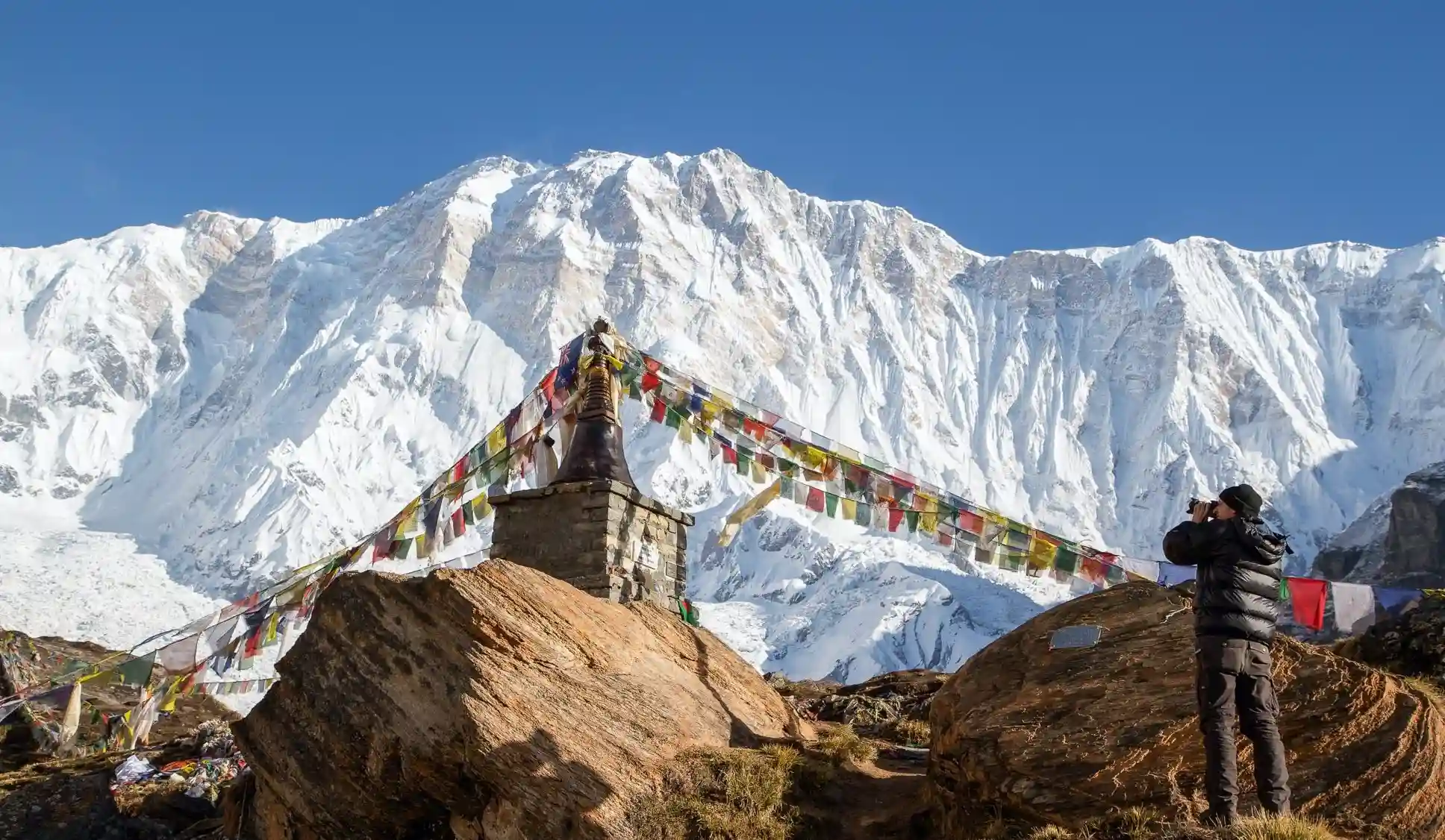
  • Enjoy mountain views of peaks such as Dhaulagiri, Nilgiri, and Machhapuchhre, along with Mt. Annapurna (8,091 m)
  • Watch a clear sunrise from Poon Hill at 3,210 meters
  • Reach Annapurna Base Camp at 4,130 meters with a steady and achievable climb
  • Skip the long return walk and take a helicopter flight back to Pokhara
  • Walk through quiet forest trails with fresh air and natural surroundings
  • Cross suspension bridges and follow rivers along the trekking route
  • Stay in simple tea houses and experience basic mountain living
  • Notice the change in landscape as you move from green hills to rocky high-altitude areas
  • Travel on a direct and time-saving route suitable for short holidays

Overview

Annapurna Base Camp trekking is one of the most popular trekking routes in Nepal and is done by many trekkers every year. To make the journey shorter and more comfortable, this 5-day trek includes a helicopter return from the base camp instead of walking back the same route. Annapurna Base Camp is located at 4,130 meters, below Mt. Annapurna (8,091 m), the tenth-highest mountain in the world. The trail passes through the Annapurna Conservation Area, where you walk through forests, rivers, and small villages.

Along the route, you can see mountains like Annapurna, Dhaulagiri, Machhapuchhre, and others from different points. The trail goes through forest paths, streams, and open areas, giving a mixed view of the landscapes. You will also pass through villages where people from different communities live, which gives a simple understanding of local culture and lifestyle. The walking pace is gradual, making it suitable for beginners, families, or small groups who want a short and manageable trekking experience in the Himalayas.

What to expect during the Annapurna Base Camp trek with helicopter return with Everest Chopper?

During this trek, you can expect a well-managed and time-efficient journey where everything is arranged in advance. The trip follows a direct route with planned stops, so there is less confusion during the trek. You will walk for several hours each day, with regular breaks for meals and rest at tea houses. The pace is steady, and guides help manage timing so that you reach each destination comfortably. As this is a shorter itinerary, the schedule is slightly tighter, so it is important to stay prepared for daily walking and changing weather conditions.

Another thing you can expect is organized support throughout the trip. Your guide and porter will assist you during the trek, helping with directions, basic needs, and coordination. The transition from trekking to helicopter return is also handled smoothly, with proper timing based on weather conditions. You may experience minor delays due to mountain weather, which is normal in this region. Overall, the journey is structured, practical, and designed to give you a complete trekking experience within a limited time without unnecessary complications.

Safety Is Assured during Annapurna Base Camp trek with helicopter return

Your safety is our top priority throughout the Annapurna Base Camp trek with helicopter return. We follow strict safety standards and guidelines approved by Nepalese authorities, ensuring that every step of your journey is carefully planned. From airport transfers to helicopter flights, trekking routes, and accommodation, all aspects are managed with your well-being in mind. Experienced guides monitor your health and progress during the trek, helping prevent issues like altitude sickness and fatigue. Emergency plans and communication systems are always in place to handle any unexpected situations quickly and efficiently

All helicopter flights are operated by licensed pilots and high-quality helicopters suitable for mountain conditions. Before takeoff, safety instructions are provided, and the team constantly checks weather conditions to ensure secure flying. During the trek, guides and porters are trained in first aid and are ready to respond to emergencies. Additionally, proper trekking permits and insurance recommendations are arranged for your protection. With all these measures, you can enjoy the adventure confidently, knowing that your safety is fully supported by a certified and professional team throughout your journey.

Best Time to Travel to Annapurna Base Camp trek with helicopter return

The best time to do the Annapurna Base Camp trek with helicopter return is during spring (March to May) and autumn (September to November). In spring, the weather is mild and comfortable for walking, and the forests along the trail are full of blooming rhododendron flowers. The skies are usually clear in the morning, giving beautiful views of the mountains. This season is also warmer compared to others, which makes trekking at higher altitudes more manageable and enjoyable.

Autumn is another excellent time for this trek. After the monsoon, the air becomes fresh and clean, and the mountain views are very clear. The weather remains stable, which is also important for helicopter flights. Winter (December to February) is colder, especially at higher altitudes, but trekking is still possible with proper preparation. The monsoon season (June to August) is less recommended because of rain, slippery trails, and limited visibility, which can also affect flight schedules.

Why Choose Everest Chopper for Annapurna Base Camp trek with helicopter return

Choosing the right company makes a big difference in your trekking experience. For a short and high-altitude trip like this, proper planning, safety, and reliable service are very important. Everest Chopper focuses on providing a smooth and well-organized journey from start to finish. From experienced guides to quality helicopter services, everything is arranged with care. The goal is to make your trip comfortable, safe, and memorable without any stress. Here are some reasons why Everest Chopper is a good choice for this adventure.

  1. Experienced Team: Everest Chopper provides skilled and licensed guides who know the Annapurna region very well. They help you throughout the trek, manage your pace, and ensure your safety while also sharing useful local knowledge during the journey.
  2. Reliable Helicopter Service: The helicopter flights are handled by experienced pilots trained for mountain conditions. Safety checks and weather monitoring are always prioritized, ensuring a smooth and secure return flight from Annapurna Base Camp to Pokhara.
  3. Well-Planned Itinerary: The itinerary is designed to balance trekking and rest properly. It allows gradual altitude gain, reducing the risk of altitude sickness while still completing the journey within a short five-day schedule.
  4. Comfortable Accommodation and Meals: You will stay in carefully selected tea houses that provide clean rooms and fresh meals. Even in remote areas, the focus is on comfort, hygiene, and ensuring you have enough energy for daily trekking.
  5. Flexible and Personalized Service: The company understands that every traveler is different. They offer flexibility in plans, allowing you to customize your trip based on your time, preferences, and comfort level for a better experience.
  6. Full Support and Safety Focus: From airport pickup to trek completion, the team handles all logistics. They are prepared for emergencies and provide guidance at every step, making your journey safe and worry-free.

Personalized Adventure at Annapurna Base Camp trek with helicopter return

Every traveler has a different way of exploring, so not everyone wants to follow the same fixed plan. That is why we offer personalized tours designed around your time, interests, and comfort level. You can choose a shorter or longer itinerary, adjust the walking pace, or even include more time to rest during Annapurna Base Camp trek with helicopter return. Whether you are traveling solo, with friends, or with family, the trip can be shaped to match your needs and make the experience more enjoyable.

You can also customize your stay in Kathmandu or Pokhara, upgrade hotels, or add private helicopter options for extra comfort. Small details like food preferences, trekking hours, and accommodation style can all be arranged in advance. The goal is to give you a smooth and flexible journey where everything feels easy and well planned. With a personalized approach, you can explore the Annapurna region in your own way, without feeling rushed or restricted.

Itinerary

Day 1: Drive from Pokhara to Kyumi/Nayapul then trek to Jhinu Hot Spring (1,800 m)

The day starts with a drive from Pokhara to Kyumi or Nayapul, which takes around three hours depending on road conditions. Road passes through small towns, farmland, and river valleys. After reaching the starting point, the trek begins on a gradual trail. Then, the path follows the Modi Khola and passes through local villages with basic tea houses. Walking is not very difficult and helps you adjust to the trekking pace. By late afternoon, you reach Jhinu. A short walk down leads to the natural hot spring, where you can relax before returning to your lodge.

  • Highest Point Reached: 1,800 meters
  • Distance: 8 to 10 kilometers (trekking)
  • Traveling duration: 3 hours drive + 3 hours trek
  • Overnight stay: Comfortable hotel at Jhinu
  • Meals: Lunch and Dinner
Day 2: Trek from Jhinu Hot Spring to Bamboo (2,600 m)

After breakfast, the trail continues with a descent to the river followed by a long uphill climb. You cross a suspension bridge and then follow a forest trail with many stone steps. The route passes through Chhomrong and then descends again before climbing toward Sinuwa. From here, the trail enters dense bamboo and rhododendron forest. Then, the path is shaded and quieter compared to lower sections. Walking time is longer today, and the climb can feel tiring at some points. By late afternoon, you reach Bamboo, where you stay overnight in a simple tea house.

  • Highest Point Reached: 2,600 meters
  • Distance: 10 to 12 kilometers
  • Traveling duration: 6 to 7 hours
  • Overnight stay: Comfortable hotel at Bamboo
  • Meals: Breakfast, Lunch, and Dinner
Day 3: Trek from Bamboo to Deurali (3,500 m)

The trail from Bamboo gradually climbs through forested sections and passes small settlements like Dovan and Himalaya. Then, the path follows the river closely and includes a mix of gentle climbs and flat sections. As you gain altitude, the forest becomes thinner and the surroundings feel more open. You may notice cooler temperatures and thinner air. The trail also passes through areas prone to landslides, so careful walking is important. Deurali is a small settlement with a few lodges, located in a narrow valley with steep slopes on both sides.

  • Highest Point Reached: 3,500 meters
  • Distance: 9 to 11 kilometers
  • Traveling duration: 4 to 5 hours
  • Overnight stay: Comfortable hotel at Deurali
  • Meals: Breakfast, Lunch, and Dinner
Day 4: Trek from Deurali to Annapurna Base Camp (4,130 m)

This day involves trekking into higher altitude terrain, and the route from Deurali leads toward Machhapuchhre Base Camp, with a steady climb through an open valley. The landscape changes, with fewer trees and more rocky terrain. After reaching Machhapuchhre Base Camp, the trail becomes wider and easier to follow. From here, you continue walking toward Annapurna Base Camp. The area is surrounded by high peaks and offers wide mountain views. Walking slowly is important due to the altitude. You stay overnight at the base camp in basic accommodation.

  • Highest Point Reached: 4,130 meters
  • Distance: 8 to 10 kilometers
  • Traveling duration: 4 to 5 hours
  • Overnight stay: Comfortable hotel at Annapurna Base Camp
  • Meals: Breakfast, Lunch, and Dinner
Day 5: Early morning exploration at Annapurna Base Camp (4,130 m) then helicopter ride to Pokhara (820 m)

You start the day early to observe the surroundings at Annapurna Base Camp. The morning is usually clear, and you can see the mountain range more clearly before clouds form. After breakfast, you prepare for the helicopter flight. The flight is arranged based on weather conditions and operates from the base camp helipad. It takes around 25 to 30 minutes to reach Pokhara. During the flight, you can see the trekking route, forests, and river valleys from above. Once in Pokhara, the trek officially ends, and you can transfer to your hotel.

  • Highest Point Reached: 4,130 meters
  • Distance: 1 to 2 kilometers walk at base camp + 65 to 70 kilometers helicopter flight to Pokhara
  • Traveling duration:  Short walk + 25 to 30 minutes helicopter flight
  • Overnight stay:  Luxury hotel in Pokhara
  • Meals: Breakfast

Packing List for Annapurna Base Camp trek with helicopter return

Packing for this short but high-altitude trek needs a bit of planning. Even though the journey is only five days, you will be walking through different climates, from warm lower trails to cold mountain areas. The temperature can change quickly, especially as you reach higher altitudes like Annapurna Base Camp. It is important to carry warm layers, but at the same time, try not to overpack. Keeping your bag light will make trekking much easier and more comfortable. You will have a porter, but it is still better to pack only what is necessary. Choose items that are useful, lightweight, and easy to carry. Good preparation will help you enjoy the trek without stress.

Packing List:

  • Warm down jacket
  • Thermal inner layers (top and bottom)
  • Fleece or warm sweater
  • Waterproof and windproof jacket
  • Comfortable trekking pants
  • T-shirts (quick-dry recommended)
  • Gloves and warm hat
  • Sun hat or cap
  • Good quality trekking shoes (already broken in)
  • Comfortable socks (wool or trekking socks)
  • Sandals or slippers for evening
  • Backpack (daypack)
  • Duffel bag (for porter)
  • Sleeping bag (recommended for cold nights)
  • Water bottle or hydration system
  • Sunglasses with UV protection
  • Sunscreen and lip balm
  • Personal toiletries (toothbrush, soap, towel)
  • Basic first aid kit and personal medicines
  • Headlamp or flashlight with extra batteries
  • Power bank or extra batteries
  • Snacks and energy bars
  • Trekking poles (optional but helpful)
  • Camera or mobile for photos
  • Important documents (passport, permits, insurance copy)

What's included

  • Airport pick-up and drop-off for both international and domestic flights
  • Welcome dinner upon arrival in Kathmandu
  • Hotel accommodation in Kathmandu with breakfast
  • Round-trip flights between Kathmandu and Pokhara
  • Experienced, licensed English-speaking guide and porter
  • All required trekking permits (ACAP and TIMS)
  • Private transportation for all scheduled activities
  • Entrance fees for cultural and heritage sites mentioned in the itinerary
  • Full coverage of staff expenses (salary, food, insurance, and accommodation)

What's excluded

  • International flight tickets and Nepal visa fees
  • Meals not mentioned in the itinerary
  • Personal travel insurance (required for high-altitude trekking)
  • Personal expenses such as drinks, laundry, snacks, and other costs
  • Tips for guides and porters
  • Additional accommodation due to delays or itinerary changes
  • Extra costs caused by unexpected situations like bad weather or strikes

Frequently Asked Questions

Is the Annapurna Base Camp trek with helicopter return difficult?

The trek is considered moderate, which means it is suitable for people with basic fitness. You will be walking for 5 to 7 hours daily on some days, including uphill and downhill sections. The trail has many stone steps, which can feel tiring, but it is manageable if you walk slowly. No technical climbing skills are needed. With proper pacing, rest, and hydration, most trekkers can complete this journey comfortably within the given time.

Do I need previous trekking experience for this trip?

Previous trekking experience is helpful but not required. Many first-time trekkers complete this trek successfully. The route is well-developed, and there are tea houses along the way for rest and food. What matters most is your physical fitness and mental readiness. If you can walk for several hours a day and handle gradual altitude gain, you will be fine. Preparing with short hikes or regular walking before the trip can make your experience much easier and more enjoyable.

Is there a risk of altitude sickness on this trek?

Yes, there is a possibility of altitude sickness since the trek reaches above 4,000 meters. However, the itinerary is designed to reduce this risk by allowing gradual altitude gain. It is important to walk slowly, drink enough water, and avoid rushing. Common symptoms include headache, dizziness, and tiredness. If symptoms become serious, the guide will take necessary action. The helicopter return also provides a quick descent option, which helps reduce risks at high altitude.

What kind of accommodation can I expect during the trek?

Accommodation during the trek is in local tea houses. These are simple lodges run by local families. Rooms are basic, usually with twin beds, blankets, and shared bathrooms. At lower altitudes, facilities are slightly better, while at higher places they are more basic. The environment is warm and welcoming, and you get a chance to experience local culture. Meals are served in a common dining area where trekkers gather, relax, and share stories after a long day.

What food is available during the trek?

You will find a variety of simple and fresh meals along the trail. Common options include dal bhat (rice, lentils, and vegetables), noodles, pasta, fried rice, soups, eggs, and bread. Tea houses also serve tea, coffee, and some snacks. The food is prepared fresh and is suitable for trekking. It is recommended to eat well and stay hydrated. Even though the menu is not very wide, it provides enough energy to support your daily trekking activities.

Is the helicopter ride safe and reliable?

Yes, the helicopter ride is generally safe and operated by experienced pilots who are trained for high-altitude flights. The helicopters used are designed for mountain conditions. However, flights depend on weather conditions, so there can be delays if the weather is not clear. Safety is always the first priority. Before the flight, you will be given basic instructions. The ride itself is smooth and offers incredible aerial views of the mountains and valleys below.

What is the best time to do this trek?

The best time to do this trek is during spring (March to May) and autumn (September to November). During these months, the weather is stable, skies are clear, and mountain views are at their best. Spring also brings blooming rhododendron forests, adding color to the trail. Autumn offers crisp air and excellent visibility. Winter is colder and may have snow, while monsoon brings rain and clouds, which can affect both trekking conditions and helicopter flights.

How much weight can a porter carry during the trek?

A porter usually carries around 20 to 25 kg, which is shared between two trekkers. This means each person should pack around 10 to 12 kg for the porter. It is important to pack only necessary items and keep your luggage light. You will also carry a small daypack with essentials like water, snacks, and personal items. Respecting the porter’s weight limit ensures their safety and helps maintain a smooth trekking experience for everyone.

Do I need travel insurance for this trek?

Yes, travel insurance is highly recommended and very important for this trek. Since you will be trekking at high altitude, the insurance should cover altitude-related issues and emergency helicopter evacuation. In case of illness, injury, or unexpected situations, insurance can save you from high costs. Make sure to read the policy carefully and confirm that it includes trekking up to 4,000 meters or more. Having proper insurance gives peace of mind throughout the journey.

User Review