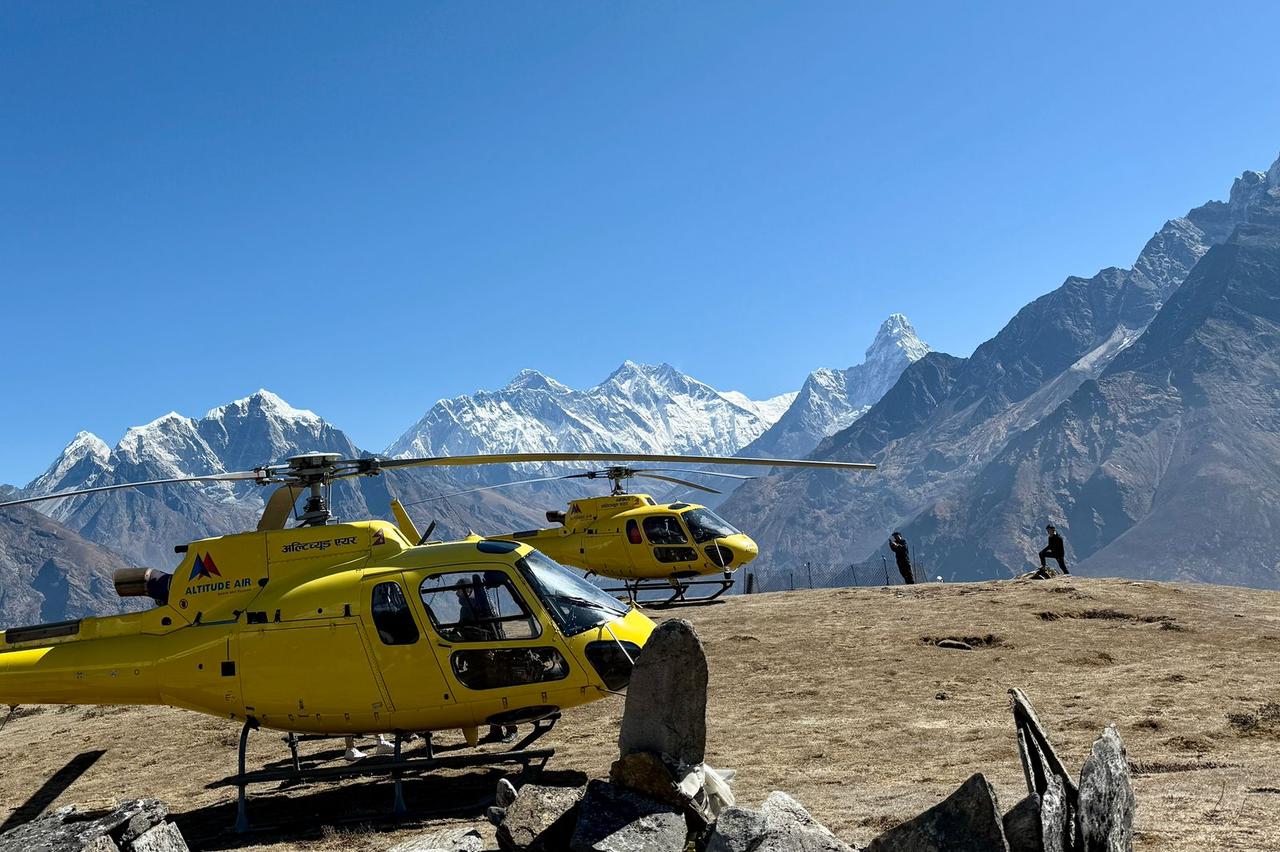
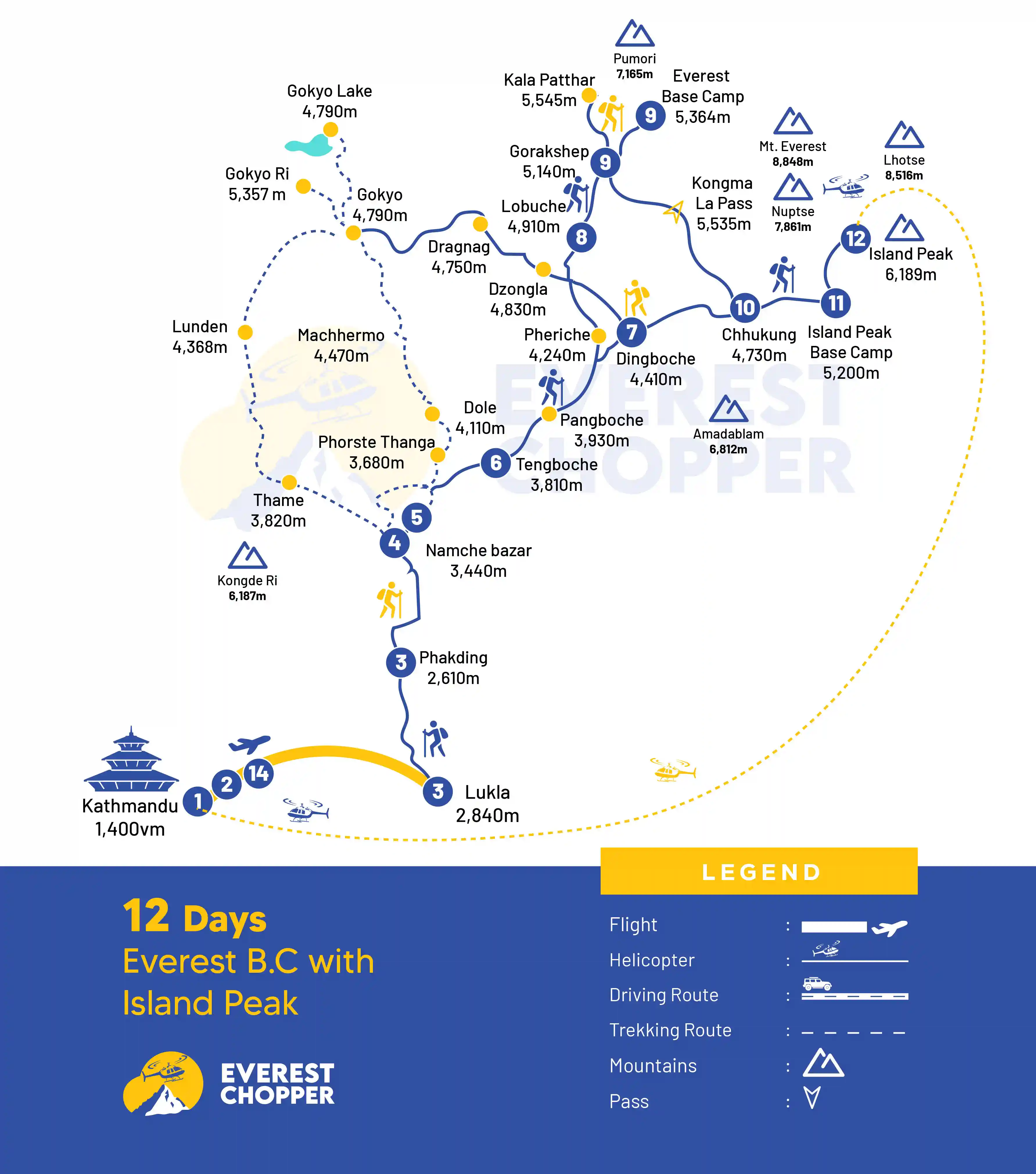
Many people dream of seeing Mount Everest and the surrounding mountains from close up. This Everest Base Camp with Island Peak and Heli Return trip is designed mainly for those who want to enjoy the Everest region with the added comfort and experience of a helicopter tour. The Everest Base Camp with Island Peak and Heli Return focuses on combining trekking with a scenic helicopter flight. After trekking through the Everest trail and reaching the key highlight points, the return journey is done by helicopter instead of walking back for several days. This helicopter tour saves time and reduces physical effort, making the overall journey more comfortable.
This helicopter flight offers clear aerial views of Mount Everest, Lhotse, Nuptse, Ama Dablam, and the Khumbu Glacier. Seeing these mountains from the air gives a very different perspective compared to trekking. The flight is operated by experienced pilots, depending on weather, and visibility for safety. After the ascent, the helicopter return provides a smooth and quick way back to Kathmandu. This trek is a good choice for people who want to see the Everest region fully, enjoy stunning mountain views, and have a comfortable and quick way to return.
What to expect during the Everest Base Camp with Island Peak and Heli Return with Everest Chopper?
Everest Base Camp with Island Peak and Heli Return from Everest Chopper is an exciting way to explore the Everest region. As Everest Chopper is one of the best heli tour company in Nepal, we offer a safe, comfortable, and well-managed experience with professional crews and reliable service throughout your journey.The trek combines moderate trekking with the thrill of a scenic helicopter flight, giving you the best of both worlds. Each day involves walking 4 to 6 hours, with plenty of rest stops, time for photos, and opportunities to enjoy the stunning mountain views. The pace is gentle, allowing your body to adjust gradually to higher altitudes.
Accommodation along the trail is in clean, warm, and comfortable hotels. Meals are freshly prepared and include local and simple international options. At higher elevations, facilities are more basic, with limited electricity, hot showers, or Wi-Fi. Experienced guides and trained porters accompany you throughout, monitoring your health, pace, and overall safety. The helicopter return is the highlight of the trip, offering breathtaking aerial views of Mount Everest, Island Peak, Lhotse, Nuptse, and the Khumbu region. It saves time, reduces physical strain, and makes the journey unforgettable.
Safety and Comfort on the Everest Base Camp with Island Peak and Heli Return
Your safety and comfort are the top priority throughout the Everest Base Camp with Island Peak and Heli Return. The itinerary is carefully planned with gradual altitude gain and rest days to help your body adjust to high elevations. Experienced guides monitor your pace, health, and overall condition daily to reduce the risk of altitude sickness. Walking hours are kept reasonable, and overnight stops are chosen for proper rest and recovery.
Accommodation along the route is arranged in reliable and comfortable hotels, offering warm meals, clean drinking water, and safe sleeping conditions. At higher elevations, facilities are simpler but essential comfort and safety standards are maintained. The trekking team stays connected through communication systems, and clear emergency plans are in place for remote areas.
The helicopter return at the end of the trek adds an extra layer of safety and comfort. It allows a quick and smooth descent from high altitude, avoiding long and tiring walks back. All flights are operated after careful weather checks, and certified rescue helicopters are available in emergencies. From your arrival in Kathmandu to the final helicopter flight, every detail is managed responsibly so you can enjoy the trek safely and confidently.
In case of any serious problem, we arrange genuine helicopter rescue services only. All rescue flights are operated by licensed helicopter companies that are officially authorized by Nepal’s aviation authorities to carry out mountain rescue operations. The pilots are fully trained and certified for high-altitude flying, and flights are done only after proper weather checks. The helicopter return also helps reduce physical strain by providing a quick and safe descent. From start to finish, everything is handled responsibly so you can travel with confidence and peace of mind.
Climate and Best Time To Go for Everest Base Camp with Island Peak and Heli Return
Everest Base Camp with Island Peak and Heli Return cold mountain weather that changes quickly. Daytime temperatures in lower villages are generally mild, while higher altitudes are much colder, especially at night. Snow, sunshine, and clouds can all appear in a single day, so it is important to be prepared. Choosing the right season makes your trek safer, more comfortable, and offers the best views of Mount Everest and the surrounding peaks.
1. Spring (March to May)
Spring is one of the most popular seasons for trekking. The weather is generally warm and clear, giving excellent mountain views. Rhododendron flowers bloom along the trails, adding color to the landscape. Days are longer, which makes walking easier and more comfortable. While temperatures at high altitudes are still cold, the overall conditions are pleasant, making it a perfect time for Everest Base Camp and Island Peak trekking.
2. Autumn (September to November)
Autumn is another ideal trekking season. The monsoon rains have passed, leaving the skies clear and crisp. The air is fresh, and visibility of Everest, Lhotse, Ama Dablam, and other peaks is at its best. Temperatures are moderate, and walking conditions are safe and comfortable. This season is perfect for photographers and those who want to enjoy the full beauty of the Himalayas with stable weather and clear trails.
3. Winter (December to February)
Winter brings cold temperatures, especially above 3,500 m, and snow may cover higher trails. While lower villages may still be accessible, trekking is more challenging due to frost, icy paths, and shorter daylight hours. The air is dry and clear, which gives good mountain visibility, but the cold can make the trek difficult. This season is recommended only for experienced trekkers who are prepared for harsh winter conditions.
4. Monsoon (June to August)
The monsoon season brings heavy rainfall to the Everest region. Trails can be slippery and rivers may swell, making trekking more dangerous. Clouds and mist often cover the mountains, limiting visibility of Everest and surrounding peaks. While the landscape is green and lush, walking can be tiring and slow. This season is not recommended for first-time trekkers or those seeking clear views of the Himalayas.
Things to Consider for Everest Base Camp with Island Peak and Heli Return
Before starting the Everest Base Camp with Island Peak and Heli Return journey, it’s important to be well-prepared. This trek takes you through high-altitude trails and remote mountain areas, so planning for safety, fitness, and proper support is essential. Considering key factors beforehand will make your journey safer, easier, and more enjoyable.
1. Professional Guides and Porters
Hiring professional guides and porters is highly recommended for the Everest Base Camp with Island Peak trek. The trails pass through remote and rugged areas that can be difficult to navigate alone. Guides help you follow the right paths, plan daily stops, and share information about local culture and traditions. Porters carry your luggage, making the trek much easier and less tiring. Having both guides and porters ensures a safer, smoother, and more enjoyable trekking experience.
2. Stamina and Fitness
This trek requires good fitness because you will be walking 5–6 hours each day for several days. Preparing your body with regular exercises like walking, jogging, cardio, and strength training helps you manage the long hikes. Being physically fit allows you to enjoy the scenery, move comfortably on steep trails, and complete the climb to Island Peak without feeling overly exhausted. Starting training a few months before the trek is highly recommended.
3. Travel Insurance
Travel insurance is very important for high-altitude treks like this. Injuries, accidents, or unexpected delays can happen on the trail, and sometimes emergencies may require helicopter evacuation. Having proper insurance ensures you are covered for medical treatment, lost or damaged equipment, and other unexpected situations. This gives you peace of mind and allows you to focus on enjoying the trek safely, knowing you are prepared for any challenges along the way.