Gokyo & EBC Trek With Heli Return 14 Days

Tour Info

Trip code

DE-0012

Starting Point/ End Point

Kathmandu

Accommodations

lounge & tea house

Max Altitude

5,545 m (Kala Patthar)

Duration

14 days

country

Nepal

Trip grade

Easy

Best Season

All Time

Highlights

  • Arrival in Kathmandu with private luxury airport transfers and a relaxed introduction to Nepalese culture.
  • Enjoy guided sightseeing at UNESCO World Heritage sites including Kathmandu Durbar Square, Swayambhunath, and Pashupatinath Temple.
  • Take a scenic mountain flight from Kathmandu to Lukla, landing at one of the world’s most adventurous airfields.
  • Explore the beautiful glacier-fed Gokyo Lakes hidden high in the Everest region.
  • Hike up Gokyo Ri for wide panoramic views of Everest and surrounding Himalayan peaks.
  • Reach the iconic Everest Base Camp, the starting point for climbers of Mount Everest.
  • Walk alongside the massive Khumbu Glacier with its dramatic ice formations.
  • Experience the warm hospitality and rich culture of the Sherpa people along the trail.
  • Cross the challenging Cho La Pass for an exciting high-altitude trekking experience.
  • Enjoy a scenic helicopter flight offering aerial views of the entire Khumbu region.
  • Visit historic monasteries such as Tengboche, a key spiritual site in the region.
  • Learn about the traditions, customs, and lifestyle of the Sherpa community.

Overview

Trip Overview of Gokyo & EBC Trek With Heli Return

The Gokyo & EBC Trek With Heli Return from Everest Chopper, one of the best heli tour organization in Nepal, is a complete Everest adventure, combining trekking, high passes, stunning viewpoints, and a scenic helicopter flight. This trek takes you to Everest Base Camp, crosses the Cho La Pass, and includes hikes to Kala Patthar and Gokyo Ri, as well as a visit to the turquoise Gokyo Lakes. The helicopter ride from Gokyo back to Lukla adds comfort and unforgettable aerial views. This journey starts in Kathmandu with a flight to Lukla. From there, you trek to Phakding and then to Namche Bazaar via Monjo, the entrance to Sagarmatha National Park. A day in Namche allows time for acclimatization.

Then trek continues through Sherpa villages like Tengboche, Debuche, and Dingboche. From Gorak Shep, you hike to Everest Base Camp, passing the Khumbu Glacier and Khumbu Icefall, surrounded by the towering Himalayan peaks. A sunrise hike to Kala Patthar offers spectacular views of Everest before returning to Lobuche. Cho La Pass is the most challenging section, requiring trekking over frozen glaciers, loose rocks, and moraine trails. The effort is rewarded with stunning mountain views. At Gokyo Village, you stay beside the beautiful Gokyo Lake and hike to Gokyo Ri for panoramic vistas of the Himalayas and Ngozuma Glacier.

A helicopter flight from Gokyo to Lukla saves time and energy, giving breathtaking aerial views of the Everest region. The trek ends with a flight back to Kathmandu. This trek is ideal for those with some high-altitude trekking experience. The Cho La Pass is physically and mentally demanding. The best time to do this trek is spring, autumn, or early winter, when the weather is clear and stable.

What to expect during the Gokyo & EBC Trek With Heli Return with Everest Chopper?

EBC Trek With Heli Return is designed for trekkers who want to experience the Everest region in a more relaxed and comfortable way. Walking days are not rushed and usually involve steady hiking for a few hours at a time. Regular stops are planned for rest, photography, and soaking in the mountain scenery. The route follows a gradual climb, giving your body time to adjust to higher altitudes and making the overall trek smoother and more enjoyable.

Along the trail, you will stay in carefully selected hotels that offer the best comfort available in the region. Rooms are simple but warm and well maintained, providing a good night’s rest after each day on the trail. Meals are freshly cooked and include a variety of local and basic international dishes. As altitude increases, facilities become more limited, and services like hot showers, electricity, and Wi-Fi may not always be available.

Throughout the trek, professional guides and trained porters accompany you, helping with pacing, safety, and any altitude-related concerns. The final helicopter flight is a major highlight, offering stunning aerial views of Everest Base Camp, Gokyo Ri, Kala Patthar, and the Khumbu Glacier. This return flight saves time, avoids long downhill walks, and adds a special luxury finish to the trek.

Safe and Comfortable Gokyo & EBC Trek With Heli Return

Your safety and comfort  at EBC Trek With Heli Return are given the highest importance throughout the Gokyo & Everest Base Camp trek with helicopter return. The itinerary is thoughtfully planned with steady altitude gains and rest days, allowing your body enough time to adjust to the changing elevation. Experienced guides closely observe your pace, health, and overall condition each day, helping to reduce the chances of altitude-related issues. Daily walking hours are kept realistic, and overnight stops are chosen carefully for proper rest and recovery.

Accommodation along the route is arranged in reliable and comfortable hotels, offering warm meals, clean drinking water, and safe resting environments. While facilities become simpler at higher elevations, essential comfort and safety standards are always maintained. The trekking team stays connected through communication systems, and clear emergency plans are in place, especially in remote sections of the Gokyo and Everest regions.

The helicopter flight at the end of the trek adds both comfort and an extra layer of safety. It allows a fast and smooth descent from high altitude, avoiding long and tiring downhill walks. All helicopter flights are operated only after checking weather conditions carefully. In case of real emergencies, certified rescue helicopters with authorized pilots are arranged. From your arrival in Kathmandu to your return flight from the mountains, every detail is handled responsibly so you can enjoy the trek with confidence and peace of mind.

Best Time to Travel Gokyo & EBC Trek With Heli Return

Selecting the right season makes a big difference to the comfort and overall experience of this luxury trek. The most suitable times are spring (March to May) and autumn (September to November), when weather conditions are generally stable and the mountains are clearly visible. During these months, temperatures are comfortable for walking, and flights to Lukla along with helicopter services operate more smoothly.

Spring brings fresh colors to the trail, with forests beginning to bloom and landscapes looking lively after winter. The days are warmer and longer, making trekking more relaxed, and the Gokyo route remains less crowded compared to the main Everest trail.

Autumn on the other hand, is known for cool, clear days and excellent visibility, offering some of the best mountain views of the year. The air feels crisp after the monsoon, and trekking conditions are ideal. While the trek can be done in other seasons, spring and autumn offer the best mix of weather, safety, and scenic beauty for a comfortable and rewarding Himalayan journey.

Cost of Gokyo & EBC Trek With Heli Return

Accommodation on this luxury trek is chosen with comfort, cleanliness, and convenience as top priorities. At each stop, you stay in the best available hotels, providing warm rooms, cozy beds, and proper dining areas where you can relax after a day of trekking. 

In major villages such as Namche Bazaar, Dingboche, and Gokyo, upgraded hotels are arranged wherever possible. These offer private rooms, better insulation, and improved facilities compared to smaller settlements. Meals are freshly prepared daily, and dining areas are heated to keep you comfortable during the evenings.

While high-altitude accommodation cannot match city hotels, the selected hotels strike a perfect balance between comfort and authenticity. They ensure a restful and enjoyable stay while keeping you close to the Himalayan environment. This thoughtful choice of lodging enhances the trekking experience, making your journey safe, cozy, and memorable.

Accommodation and Meals on Gokyo & EBC Trek With Heli Return

On this luxury trek, accommodation is carefully arranged in well-kept mountain hotels that prioritize comfort, cleanliness, and a welcoming atmosphere. Most rooms are twin-sharing with proper beds and basic bedding, providing a cozy place to rest after a day on the trail. While facilities in remote Himalayan villages are simpler, every effort is made to ensure warmth and comfort throughout the trek. Meals are freshly prepared daily to support your energy and endurance at high altitudes. You will enjoy a mix of local dishes like dal bhat along with pasta, soups, noodles, eggs, and other nutritious options. As you climb higher, meals are lighter, warm, and easy to digest, helping your body adjust to altitude while keeping you nourished.

Trekking days are planned with a steady pace, regular breaks, and manageable distances, typically five to six hours per day. Trails include gradual climbs, stone steps, forested paths, and steeper sections near Gokyo Ri and Everest Base Camp. The helicopter return at the end of the trek reduces long downhill walking, making the journey easier for those with limited time or knee concerns. With good preparation, a positive attitude, and the support of experienced guides and porters, this trek is challenging yet fully achievable, offering a deeply rewarding Himalayan adventure.

Difficulty Level of Gokyo & EBC Trek With Heli Return 

Trekking in the Everest region is an unforgettable experience, filled with breathtaking views, high-altitude landscapes, and encounters with the unique culture of the Sherpa people. The trails pass through glaciers, alpine meadows, and remote villages, offering both adventure and stunning scenery.
This trek is considered challenging and requires good physical fitness, stamina, and endurance. It covers some of the highest points in the Everest region, including Everest Base Camp, Kala Patthar, Gokyo, and the Cho La Pass. While it is demanding, the experience is highly rewarding and full of incredible sights.

The highest point is Kala Patthar at 5,545 meters, where the thin air and cold weather can make trekking harder. Some trekkers may feel mild symptoms of altitude sickness, such as headaches, nausea, or shortness of breath. To help, acclimatization days are included during the trek.

The route also passes over glaciers, rocky paths, and steep trails, with the Cho La Pass (5,420 meters) being the most difficult section. Parts of this pass can be icy and slippery, so trekking poles or crampons may be needed for safety. The trail is well-marked, but trekkers should be prepared for physical challenges, changing weather, and high-altitude conditions.

Itinerary

Day 01: Arrival in Kathmandu (1400m)

Your adventure begins in Kathmandu, Nepal’s vibrant capital. Upon arrival at Tribhuvan International Airport, you will be warmly welcomed by a representative from our team. After a traditional greeting, you will be transferred to your luxury hotel in a private vehicle. Once checked in, you can take some time to relax and recover from your flight before starting your journey. Kathmandu is lively and colorful, offering a gentle introduction to Nepalese culture.

Later in the day, you will meet your trekking guide, who will provide an overview of the trek. They will explain the itinerary, key points of interest, accommodation details, altitude tips, and safety guidelines. This is also the time to finalize your trekking gear and make sure everything is ready for the journey ahead. If there’s extra time, you can enjoy a short walk around Thamel or simply unwind at the hotel. This day is designed to be light and relaxing, giving your body a chance to rest and adjust before heading into the Himalayas.

Highest Point Reached: 1400 meters
Distance: 10 Kilometers (airport transfer)
Traveling duration: 30 to 45 minutes
Overnight stay: Luxury hotel in Kathmandu
Meals: Breakfast

Day 2: Guided Sightseeing Tour

You begin your day with a private guided tour of the Kathmandu Valley, exploring some of Nepal’s most important cultural and historical sites. This sightseeing day provides a fascinating contrast to the high-altitude trekking you will begin soon. Your tour starts at Kathmandu Durbar Square, where you can admire ancient palaces, temples, and courtyards showcasing traditional Newari architecture. 

Next, you can visit Swayambhunath Stupa (Monkey Temple), perched on a hill with panoramic views of the Kathmandu Valley and rich Buddhist heritage. The day ends at Pashupatinath Temple, one of Nepal’s most sacred Hindu sites, where you can witness prayer rituals along the Bagmati River. The pace of the day is relaxed, allowing plenty of time for photography, short walks, and exploring with your guide. After sightseeing, you return to your hotel to rest and prepare for the next day’s journey to Lukla.

Highest Point Reached: 1400 meters
Distance: 25 to 30 Kilometers (throughout the sightseeing drive)
Traveling duration: 5 to 6 hours (including visits)
Overnight stay: Kathmandu
Meals: Breakfast


Day 3: Fly to Lukla (2840m/ 9317ft) then Trek to Phakding (2610m/ 8562ft)

Start your day with an early morning flight from Kathmandu to Lukla (2,840 m). The short 35 to 40 minute flight offers spectacular views of snow-capped peaks and the Dudh Koshi Valley below. Once you land, you can take some time to organize your trekking gear and meet your guides and porters before beginning the trek. The trek from Lukla to Phakding is a gentle introduction to the Everest region. You will follow the Dudh Koshi River, cross suspension bridges, and pass through small Sherpa villages, forests, and trails lined with rhododendron trees. Along the way, enjoy views of Kusum Kangru and surrounding hills. Today’s trek is short, about 3 hours, making it perfect for easing into high-altitude trekking.


Highest Point Reached:  2,840 meters (Lukla)
Distance: 7 to 8 Kilometers
Traveling duration: Approximately 3 hours
Flight Duration:35 to 40 minutes (Kathmandu to Lukla)
Overnight stay: Phakding
Meals: Breakfast, Lunch, Dinner

Day 4: Trek from Phakding (2610m/ 8562ft) to Namche Bazaar (3440m/ 11,286ft)

You trek along the Dudh Koshi River, passing through lovely blue pine and rhododendron forests today. You will trek through Toktak and Benkar, enjoying views of waterfalls and snow-capped peaks like Thamserku (6,623 m) and Khumbi La (5,765 m). At Monjo (2,840 m), your Sagarmatha National Park permits are checked before continuing. The trail climbs steadily with a mix of rocky paths, river crossings, and bridges, eventually approaching the junction of the Bhote Koshi and Dudh Koshi rivers. About an hour before Namche, you get your first glimpse of Mount Everest (8,848 m), Lhotse (8,516 m), and Nuptse (7,879 m). The trail then winds through pine forests to reach Namche Bazaar, where you stay overnight.

Highest Point Reached: 3,440 meters
Distance: 10 Kilometers
Traveling duration: 5 to 6 hours
Overnight stay: Namche Bazaar
Meals: Breakfast, Lunch, Dinner9

Day 5: Acclimatization Day in Namche Bazaar (3440m/ 11,286ft)

Namche Bazaar is the perfect place for a rest and acclimatization day before heading to higher altitudes. Today is designed to help your body adjust after climbing above 3,000 m. You can take a short hike to a viewpoint above Namche, offering stunning views of Mount Everest, Ama Dablam, Thamserku, and Kwangde, as well as an aerial view of the village. You can also visit the National Park Museum to learn about the Khumbu region, Sherpa culture, local wildlife, and mountaineering history. For a longer option, you can hike up to Everest View Hotel (3,880 m) or explore Thame Monastery and Khumjung Village. In the afternoon, strolling through Namche Bazaar’s shops, cafes, and restaurants, or relax with a spa or massage is an activity which you can do.

Highest Point Reached: 3,880 meters
Distance: 2 to 3 Kilometers for short hikes, 12 to 15 Kilometers for full-day optional trek
Traveling duration: 1 to 2 hours for short hikes, 6 to 7 hours for full-day trek
Overnight stay: Namche Bazaar
Meals: Breakfast, Lunch, Dinner

Day 6: Trek from Namche Bazaar (3440m/ 11,286ft) to Dole (4110m/ 13,484ft)

Leaving the lively streets of Namche Bazaar, today’s trek takes you deeper into the Everest region toward Dole. The trail gradually climbs through alpine forests and rhododendron trees, offering peaceful surroundings and breathtaking mountain views along the way. You will pass small Sherpa villages, providing a glimpse into their daily life, culture, and traditions. The day of the trek is moderately challenging, with a mix of uphill paths and gentle slopes, giving you time to enjoy the scenery and take photos. Upon reaching Dole, you will be welcomed by quiet surroundings and a cozy hotel for your overnight stay.

Highest Point Reached: 4,110 meters
Distance: 10 Kilometers
Traveling duration: 5 to 6 hours
Overnight stay: Dole
Meals: Breakfast, Lunch, Dinner

Day 7: Trek from Dole (4110m/ 13,484ft) to Machhermo (4470m/ 14,665ft)

You trek uphill today into the Everest region, passing open alpine meadows where yaks graze and dotted with colorful prayer flags and small shrines. The trail starts with a gentle climb out of the Dole Valley, following the Dudh Kosi River from above. Although the walk is moderate, the high altitude may make even small inclines feel challenging. The landscape is mostly alpine shrubs and rocky terrain, framed by towering snow peaks and a deep blue sky. After about 2 hours, you reach Luza (4,360 m), and then another hour brings you to Machhermo (4,470 m). After lunch, you can explore nearby moraines near Kyajo Ri (6,168 m) or Machhermo Peak (6,073 m).

Highest Point Reached: 4,470 meters
Distance: 8 Kilometers
Traveling duration: 3 to 4 hours
Overnight stay: Machhermo
Meals: Breakfast, Lunch, Dinner

Day 8: Trek from Machhermo (4470m/ 14,665ft) to Gokyo (4790m/ 15,715ft)

Continuing your trek takes you from Machhermo to the beautiful Gokyo Village, nestled beside the sparkling Gokyo Lake and surrounded by towering Himalayan peaks. The trail gradually climbs through alpine meadows and rocky terrain, offering ever-changing scenery that highlights the raw beauty of the region. As you ascend, the views become even more impressive, with glaciers, mountains, and peaceful valleys around you. Arriving at Gokyo, you are greeted by a serene lakeside setting framed by majestic peaks, making it one of the most memorable stops on the trek. This evening, relax at your hotel and enjoy the calm of the high Himalayas.

Highest Point Reached: 4,790 meters
Distance: 8 Kilometers
Traveling duration: 4 to 5 hours
Overnight stay: Gokyo
Meals: Breakfast, Lunch, Dinner

Day 9: Acclimatization Day at Gokyo (4790m/ 15,715ft)

You spend this day as a rest and acclimatization day at Gokyo, giving your body time to adjust to the high altitude. Early in the morning, hike to Gokyo Ri (5,357 m) for a stunning panoramic view of the Khumbu region, including Mount Everest, Lhotse, Cho Oyu, Makalu, and Barun. On the way back, you can enjoy the peaceful beauty of Thonak Tsho (the fourth lake) and walk along the third lake. If conditions and permits allow, you can also explore the fifth lake and Ngozumba Glacier, the longest glacier in the region. Return to Gokyo Village for your overnight stay at a cozy hotel.

Highest Point Reached: 5,357 meters (Gokyo Ri)
Distance: 8 to 10 Kilometers (depending on lakes explored)
Traveling duration:  5 to 6 hours
Overnight stay: Gokyo
Meals: Breakfast, Lunch, Dinner

Day 10: Trek from Gokyo (4790m/ 15,715ft) to Dragnag (4750m/ 15,583ft)

You trek from Gokyo to the peaceful village of Dragnag, following part of the Ngozumba Glacier. The trail is shorter than previous days, with gentle ups and downs, making it a comfortable walk while still offering breathtaking alpine views. Along the way, admire towering peaks like Tawache and Cholatse and walk through open areas where yaks graze. Dragnag is a quiet settlement near the base of Cho La Pass, providing an ideal stop before the more challenging high passes ahead. The calm surroundings and views of the glacier make this day truly scenic.

Highest Point Reached: 4,750 meters
Distance: 7 Kilometers
Traveling duration: 3 to 4 hours
Overnight stay: Dragnag
Meals: Breakfast, Lunch, Dinner

Day 11: Trek from Dragnag (4750m/ 15,583ft) to Dzongla (4830m/ 15,846ft)

Your hike today will be quite difficult as you will be crossing the challenging Cho La Pass, a high mountain pass. The climb begins from Dragnag, requiring careful steps and steady pace. Reaching the top rewards you with a snowy landscape and incredible views of the Himalayan giants, including Tawache and Cholatse. After the pass, the trail descends sharply alongside a glacier before reaching the foot of Awi Peak, then continues down to lush alpine meadows. The scenery changes from icy terrain to green grasslands, creating a dramatic and beautiful contrast. You will stay overnight at a hotel in Dzongla, resting for the next stage of the trek.

Highest Point Reached: 5,420 meters Cho La Pass
Distance: 10 Kilometers
Traveling duration: 6 to 7 hours
Overnight stay: Dzongla
Meals: Breakfast, Lunch, Dinner

Day 12: Trek from Dzongla (4830m/ 15,846ft) to Lobuche (4910m/ 16,108ft)

The tenth day of the EBC Trek via Gokyo with Helicopter Return unfolds as you continue your trip from Dzongla. On the way, you will pass the memorial stone monuments honoring Sherpas and climbers who lost their lives on Everest, a moving reminder of the mountains’ challenges. The trail continues along the western rim of the valley, offering spectacular views of Nuptse and the surrounding peaks, especially at sunset. Walking beside the Imja Khola River, the climb is gentle compared to previous days, making this a pleasant trekking experience. You will reach Lobuche in the afternoon and settle into a cozy hotel for the night.

Highest Point Reached: 4,910 meters
Distance: 8 Kilometers
Traveling duration: 4 hours
Overnight stay: Lobuche
Meals: Breakfast, Lunch, Dinner

Day 13: Trek from Lobuche (4910m/ 16,108ft) to Everest Base Camp (5365m/ 17,601ft) - Back to Gorakshep (5140m/ 16,863ft)

You start early today for the final stretch to Everest Base Camp. The trail follows the Khumbu Glacier, crossing icy sections and crevasses, with stunning mountain views along the way. After a short lunch break, continue to reach Everest Base Camp, where you can admire the colorful climbers’ tents and the surrounding giants like Nuptse, Pumori, and Lhotse. After soaking in the incredible scenery, you may take a higher route for extra views of the South Col and Khumbu Icefall before descending back to Gorakshep. Spend the evening resting and enjoying the high-altitude tranquility.

Highest Point Reached: 5,365 meters (Everest Base Camp)
Distance: 14 Kilometers (round trip)
Traveling duration: 6 to 7 hours
Overnight stay: Gorakshep
Meals: Breakfast, Lunch, Dinner

Day 14: Trek from Gorakshep (5140m/ 16,863ft) to Kala Patthar (5545m/ 18,192ft) then Fly Back to Kathmandu (1400m/ 4593ft) by Helicopter

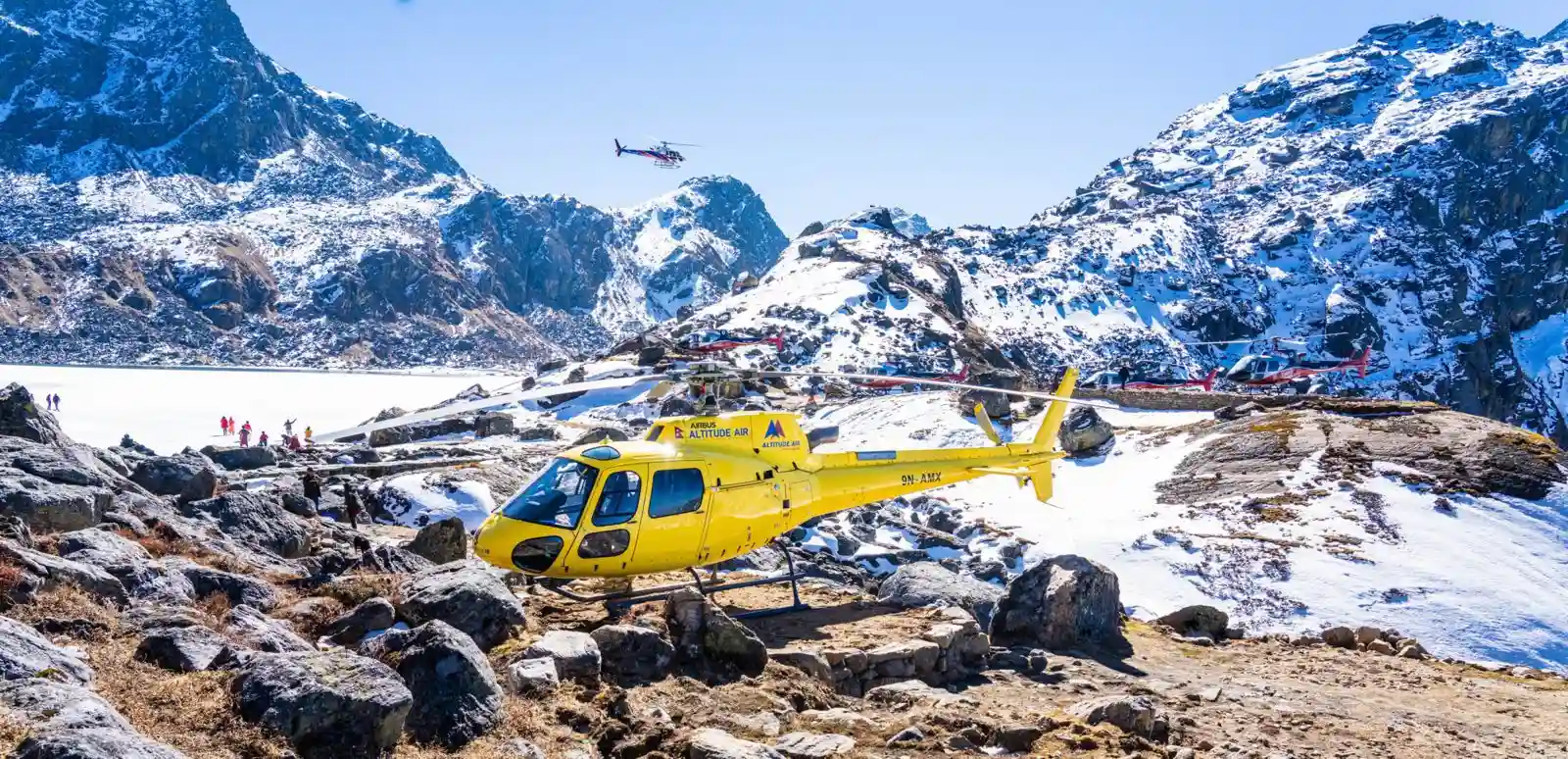
The day begins early with a trek to Kala Patthar, the highest point of the journey, offering stunning 360-degree views of Everest, Lhotse, Nuptse, Pumori, and Changtse. Enjoy the sunrise over the Himalayas and capture the unforgettable scenery. After descending to Gorakshep, board a helicopter for a scenic flight back to Kathmandu. The aerial views of the Khumbu Glacier, Gokyo Valley, and towering peaks are truly breathtaking. Upon arrival, you will be transferred to a luxury hotel in Thamel, where you can rest, relax, and celebrate the completion of your Himalayan adventure.

Highest Point Reached: 5,545 meters  (Kala Patthar)
Distance: 6 Kilometers (Gorakshep to Kala Patthar round trip)
Traveling duration: 3 to 4 hours trek + 40 minutes flight
Overnight stay: Luxury hotel in Kathmandu
Meals: Breakfast

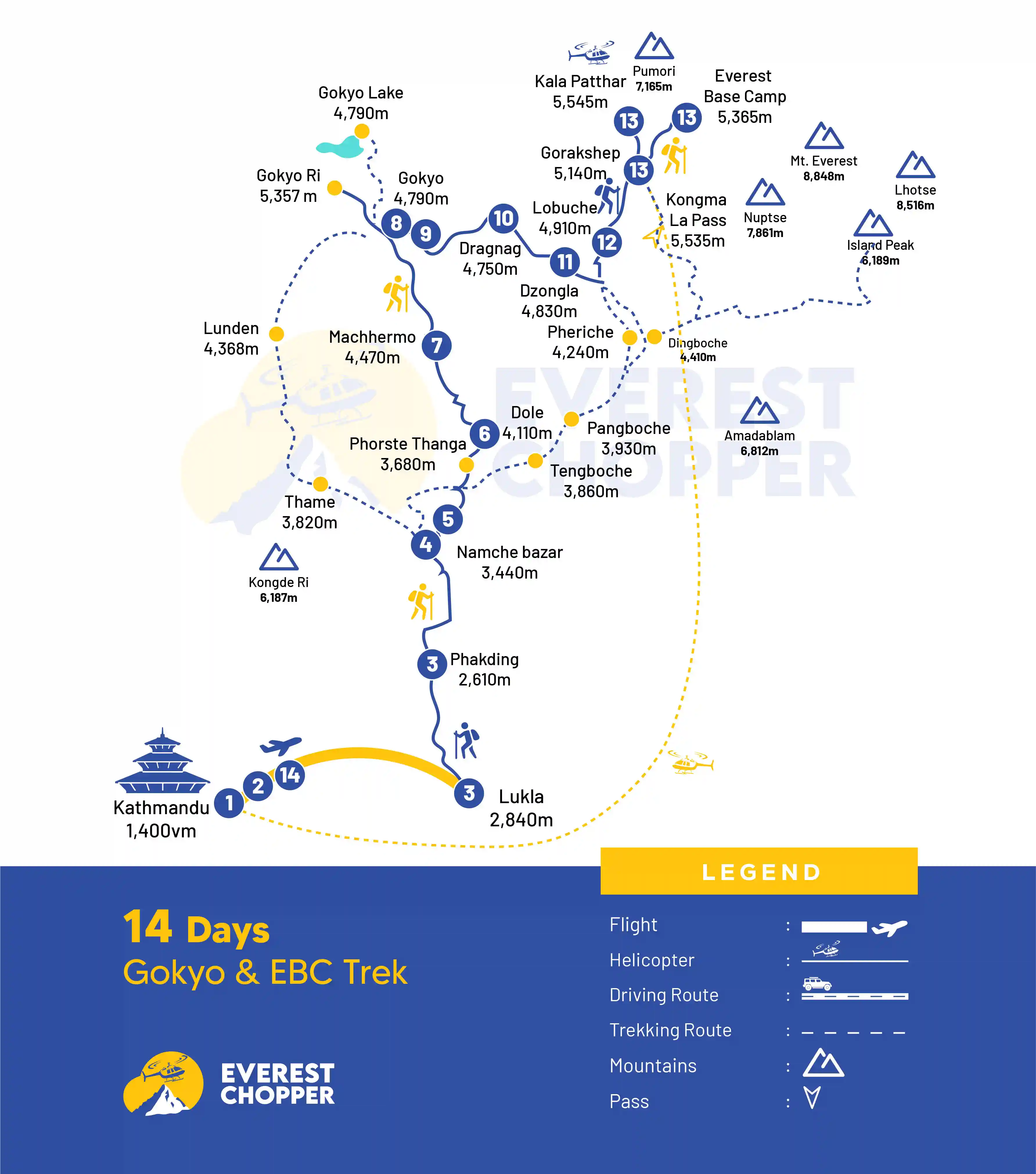
Trek Route

Gokyo and ebc trek - 14 days

Packing List for Gokyo & EBC Trek With Heli Return

Packing the right items can make your trek much more comfortable, especially since mountain weather can change quickly. For this hotel-based trek, you only need essentials, no heavy expedition gear is required. Here’s a practical list to help you travel light and enjoy the journey:

1. Clothing

  • Trekking pants and comfortable bottoms
  • Thermal base layers for warmth
  • Fleece or insulated jacket
  • Down jacket for cold mornings and evenings
  • Waterproof jacket or raincoat
  • Trekking shirts
  • Warm hat for cold and sun hat for sunny days
  • Gloves
  • Comfortable underwear and trekking socks

2. Footwear

  • Sturdy, well-broken-in trekking boots
  • Light shoes or sandals for relaxing at the hotel

3. Accessories

  • Sunglasses with UV protection
  • Sunscreen and lip balm
  • Trekking poles
  • Small daypack for daily essentials
  • Water bottle or hydration system

4. Personal Item

  • Basic toiletries
  • Any personal medications
  • Small first-aid kit
  • Wet wipes and hand sanitizer

5. Electronics & Documents

  • Camera or smartphone
  • Power bank
  • Passport and trekking permits

Travel Tip: Pack light and smart, as your main luggage will be carried by porters, so you only need a comfortable daypack for essentials. This keeps your trek easy and enjoyable without extra strain.


Cost Estimation

No. Of People

Price Per Person In USD

1 Pax

3045

2-3 Pax

2170

4-5 Pax

2005

6-7 Pax

1970

8-9 Pax

1940

10 Pax

1880

What's included

  • Airport pick-up and drop-off for all international and domestic flights
  • Welcome dinner upon arrival in Kathmandu
  • Hotel accommodation with breakfast in Kathmandu
  • Domestic round-trip flights between Kathmandu and Pokhara (if included in itinerary)
  • Services of an experienced, licensed, English-speaking guide and porter
  • All required trekking permits, including ACAP and TIMS
  • Private transportation for all scheduled activities as per the program
  • Entry fees to cultural and heritage sites mentioned in the itinerary
  • Full coverage of staff costs, including salaries, food, health insurance, and accommodation

What's excluded

  • International flights to/from Nepal and visa fees
  • Meals not listed in the itinerary
  • Personal travel insurance (mandatory for high-altitude trekking)
  • Personal expenses, such as drinks, laundry, and other extras
  • Tips for guides, porters, and drivers
  • Additional accommodation or costs caused by delays or changes in the schedule
  • Expenses arising from unexpected events, such as bad weather, strikes, or other emergencies

Frequently Asked Questions

1. Do I need previous trekking experience for this trek?

This trek is suitable for people with basic fitness. While no prior trekking experience is required, you should be able to walk for several hours on hilly terrain. The trail includes moderate to challenging sections, so regular walking or light exercise before the trip is recommended to make your experience more comfortable.

2. What is the best time to do the trek?

The ideal seasons are spring (March to May) and autumn (September to November). Spring brings blooming rhododendrons and clear views of the mountains, while autumn has stable weather and crisp skies. Avoid the monsoon season (June to August) due to heavy rainfall and slippery trails, and winter (December to February) can be very cold with snow on higher sections.

3. What kind of accommodation is provided?

The trek offers hotel-based accommodations. You’ll stay in comfortable hotels with basic but clean rooms. Meals are included at most hotels, and some offer hot showers. Luxury hotels may provide private rooms and upgraded facilities for a more comfortable stay.

4. Is food included during the trek?

Yes, most meals on the trek are included in the package. Typically, breakfasts are provided at hotels, while lunch and dinner are served at hotels along the route. You can also buy extra snacks, drinks, or hot beverages as needed at hotels. Special dietary requests can be arranged in advance.

5. How difficult is the trek in terms of altitude?

The trek reaches high altitudes, up to Kala Patthar (5545m) and Everest Base Camp (5365m). Acclimatization days are included at Namche Bazaar and Gokyo to help your body adjust. It’s important to take it slow, stay hydrated, and follow the guide’s instructions to minimize altitude sickness risks.

6. Will I have mobile or internet access?

Mobile coverage is limited on the trail. Some villages, including Namche Bazaar and Gokyo, may have limited Wi-Fi or local SIM access, but connectivity is not guaranteed. Kathmandu has full mobile and internet access, so it’s best to inform family or friends that service may be intermittent during trekking days.

7. Can I hire a porter or guide for this trek?

Yes, a licensed, English-speaking guide and porter are included in the luxury package. Porters carry heavier luggage so you can walk comfortably with a daypack. Guides provide information about the trail, local culture, and safety support throughout the trek, ensuring a smooth and enjoyable experience.

8. What should I pack for this trek?

Pack light but wisely. Bring thermal layers, trekking clothes, waterproof jackets, sturdy boots, gloves, hats, and sunglasses. Essentials like a daypack, water bottle, camera, and personal medications are needed. Porters carry the heavier luggage, so you can focus on walking comfortably and enjoying the trek without strain.

9. What happens if weather or emergencies disrupt the plan?

The trek includes flexible planning for unexpected delays like bad weather, flight cancellations, or emergencies. Guides and the team are trained to handle such situations safely, including arranging alternative transport or additional accommodation if needed. Safety is a top priority, and all efforts are made to minimize inconvenience while ensuring your health and comfort.

User Review